import numpy as np
inertia = np.array([[0.015, 0.000, 0.000],
[0.000, 0.015, 0.000],
[0.000, 0.000, 0.007]])
inverse_inertia = np.linalg.inv(inertia)
mass = 1.0
inverse_mass = 1.0 / mass
force = np.array([0.0, 0.0, 0.0])
torque = np.array([0.0, 0.0, 0.0])
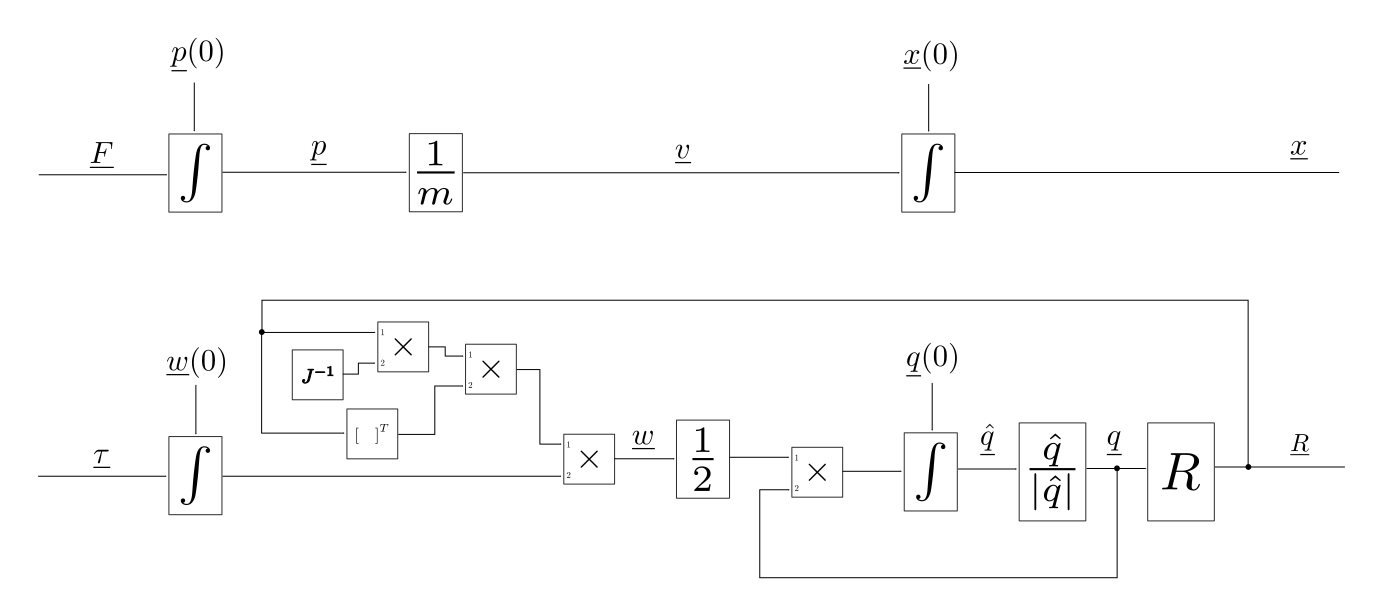
def rigid_body(x, t):
position = x[0:3]
linear_momentum = x[3:6]
angular_momentum = x[6:9]
orientation_quaternion = x[9:14]
linear_momentum_dot = force
position_dot = inverse_mass * linear_momentum
angular_momentum_dot = torque
normalized_quaternion = normalize_quaternion(orientation_quaternion)
rotation_matrix = quaternion_to_matrix(normalized_quaternion)
angular_velocity = rotation_matrix.dot(inverse_inertia)\
.dot(rotation_matrix.T)\
.dot(angular_momentum)
wx, wy, wz = angular_velocity
Q = np.array([[0.0, wz, -wy, wx],
[-wz, 0.0, wx, wy],
[wy, -wx, 0.0, wz],
[-wx, -wy, -wz, 0.0]])
orientation_dot = Q.dot(normalized_quaternion)
x_dot = np.empty(13)
y = np.empty(12)
x_dot[0:3] = linear_momentum_dot
x_dot[3:6] = position_dot
x_dot[6:9] = angular_momentum_dot
x_dot[9:13] = orientation_dot
y[0:3] = position
y[3:12] = rotation_matrix.ravel()
return x_dot, y